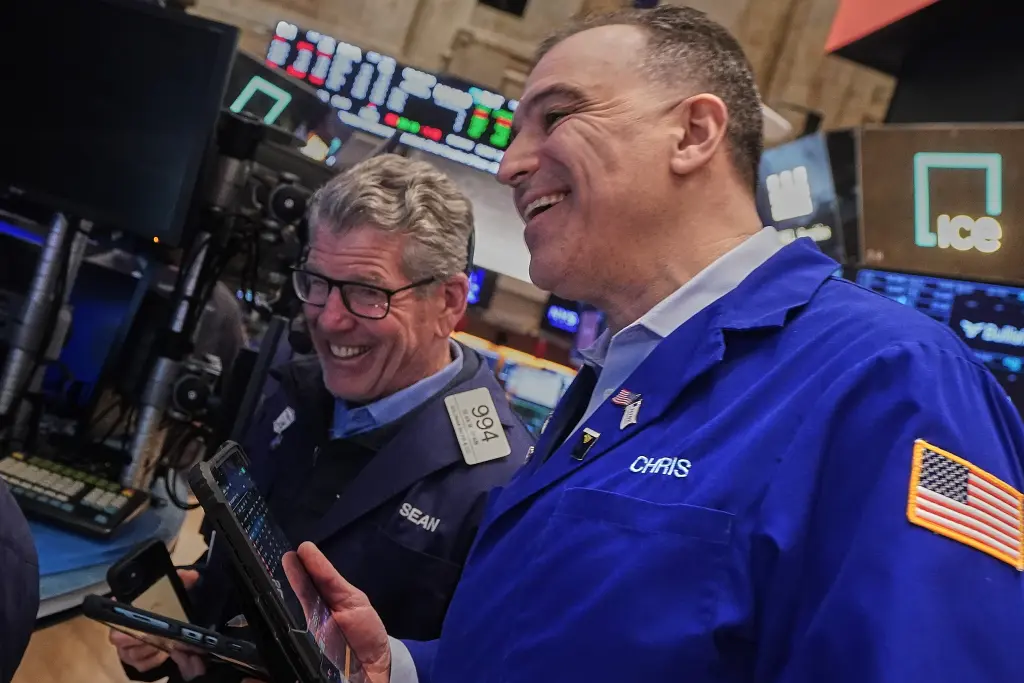
华尔街周五从本周早些时候的跌势中反弹,科技股收复了部分失地,比特币也止住了跌势(至少目前如此)。
道琼斯工业平均指数午盘上涨958点,涨幅达2%,纳斯达克综合指数上涨1.5%。蓝筹股指数此前一度触及49,885点的历史新高。
标普500指数上涨1.5%,有望实现近八天来的第二次上涨。
芯片公司是推动涨势的主要力量,英伟达股价上涨6.2%,收复了本周略高于10%的跌幅。博通股价上涨5%,缩小了本周6.3%的跌幅。
这两家公司是推动标普500指数上涨的两大主力,它们受益于市场预期各公司将加大芯片投入,以推动其人工智能技术的发展。
例如,亚马逊周四晚间表示,预计今年将投资约2000亿美元,以把握“人工智能、芯片、机器人和近地轨道卫星等开创性机遇”。
然而,如此巨额的投资,与Alphabet前一天宣布的计划类似,也引发了新的担忧。问题在于,所有这些投资能否在未来带来更高的利润。由于对此仍存疑虑,亚马逊股价下跌了8.5%。
即便周五有所反弹,标普500指数仍将面临近四周内的第三周下跌。除了担心大型科技公司(其股票在华尔街最具影响力)在人工智能领域的巨额投资外,人们还担心人工智能可能会从软件公司手中抢走客户,这也对本周市场造成了冲击。
与此同时,比特币在经历了数周的暴跌后有所企稳,此前比特币价格已跌至10月份创下历史高点的一半以上。周四晚些时候,比特币价格一度跌至接近 6 万美元,随后回升至 6.8 万美元上方。
金属市场价格在经历了剧烈波动后也略有回落。黄金上涨 1.6%,至每盎司 4,968.20 美元,而白银下跌 0.8%。
上周,在经历了令人瞠目结舌的上涨之后,金银价格突然失去了上涨动力。此前的上涨是由投资者在担忧政治动荡、批评人士称其成本过高以及全球各国政府背负巨额债务的情况下,急于寻找避险资产所推动的。然而,到了 1 月份,金银价格飙升的速度如此之快,以至于批评人士认为这种上涨不可持续。
在华尔街,比特币的复苏带动了与加密经济相关的公司股价上涨。Robinhood Markets 股价上涨 13.5%,成为标普 500 指数成分股中涨幅最大的股票。加密货币交易平台 Coinbase Global 股价上涨 9.5%。专注于买入并持有比特币的Strategy公司股价飙升19%。
美国小型公司的股票也引领了市场,尤其是那些利润依赖于美国家庭消费增长的公司。这些公司受益于美国消费者信心数据可能出现的利好。
密歇根大学的一份初步报告显示,美国消费者信心略有改善,而经济学家此前预期会出现下滑。持有股票的家庭信心改善最为显著,他们受益于标普500指数上月底创下的历史新高。
当然,据消费者调查主管乔安妮许称,对于没有持有股票的消费者而言,“信心仍然低迷”。
航空股表现强劲,市场预期美国家庭信心的增强将转化为更多的旅行支出。其中,联合航空上涨7.1%,美国航空上涨6.3%,达美航空上涨5.7%。
与此同时,罗素2000指数中的小型股上涨2.6%,涨幅超过标普500指数的两倍。与大型跨国公司相比,小型股的利润可能更依赖于美国经济的强劲表现。
在海外股市,欧洲大部分地区的股指均上涨。
尽管如此,总部位于米兰的汽车巨头Stellantis股价仍下跌近26%,此前该公司宣布将计提220亿欧元(约合260亿美元)的减值准备,以缩减其电动汽车的产量。这家汽车制造商承认“高估了能源转型的速度”,并表示正在调整业务,“以使公司与客户的实际需求保持一致”。
Wall Street is bouncing back Friday from losses taken earlier in the week, as technology stocks recover some of their drops and bitcoin halts its plunge, at least for now.
The Dow Jones Industrial Average surged 958 points, or 2%, in midday trading, and the Nasdaq composite was 1.5% higher. The blue chip index had hit an all-time high of 49,885 earlier.
The S&P 500 rose 1.5% and was heading for just its second gain in the last eight days.
Chip companies helped drive the gains, and Nvidia rallied 6.2% to trim its loss for the week, which came into the day at just over 10%. Broadcom climbed 5% to eat into its drop of 6.3% for the week.
They were the two strongest forces lifting the S&P 500, and they benefited from hopes for big spending on chips by companies to drive their forays into artificial-intelligence technology.
Amazon, for example, said late Thursday it expects to spend about $200 billion on investments this year to take advantage of “seminal opportunities like AI, chips, robotics, and low earth orbit satellites.”
Such heavy spending, similar to what Alphabet announced a day earlier, is creating concerns of their own, though. The question is whether all those dollars will prove to be worth it through bigger profits in the future. With doubt remaining about that, Amazon’s stock dropped 8.5%.
Even with Friday’s rebound, the S&P 500 is still heading toward its third losing week in the last four. Besides worries about the big spending on AI by Big Tech companies, whose stocks are the most influential on Wall Street, concerns about AI potentially stealing customers away from software companies also hurt the market through the week.
Bitcoin, meanwhile, steadied itself somewhat following a weekslong plunge that had sent it more than halfway below its record set in October. It climbed back above $68,000 after briefly dropping close to $60,000 late Thursday.
Prices in the metals market also calmed a bit following their own wild swings. Gold rose 1.6% to $4,968.20 per ounce, while silver slipped 0.8%.
Their prices suddenly ran out of momentum last week following jaw-dropping rallies, which were driven by investors clamoring for something safe to own amid worries about political turmoil, a US stock market that critics called expensive and huge debt loads for governments worldwide. By January, though, prices were surging so quickly that critics called it unsustainable.
On Wall Street, the recovery for bitcoin helped stocks of companies enmeshed in the crypto economy. Robinhood Markets jumped 13.5% for the biggest gain in the S&P 500. Crypto trading platform Coinbase Global rose 9.5%. Strategy, the company that’s made a business of buying and holding bitcoin, soared 19%.
Stocks of smaller US companies also helped lead the market, along with companies whose profits depend on US households spending more money. They benefited from potentially encouraging data on how US consumers are feeling.
A preliminary report from the University of Michigan suggested sentiment among US consumers is improving slightly, when economists were expecting to see a drop. The improvement was strongest among households who own stocks, which are benefiting from the S&P 500 setting a record late last month.
To be sure, sentiment “remained at dismal levels for consumers without stock holdings,” according to Surveys of Consumers Director Joanne Hsu.
Airline stocks were strong with hopes that more confidence among U.S. households will translate into more spending on trips. That included gains of 7.1% for United Airlines, 6.3% for American Airlines and 5.7% for Delta Air Lines.
The smaller stocks in the Russell 2000 index, meanwhile, jumped 2.6% to more than double the gain of the S&P 500. Smaller stocks can be more dependent on the strength of the US economy for their profits than their big, multinational rivals.
In stock markets abroad, indexes rose across much of Europe.
That was even though Stellantis, the auto giant whose stock trades in Milan, lost nearly 26% after saying it would take a charge of 22 billion euros, or $26 billion, as it dials back its electric vehicle production. The automaker acknowledged “over-estimating the pace of the energy transition” and said it was resetting its business “to align the company with the real-world preferences of its customers.”