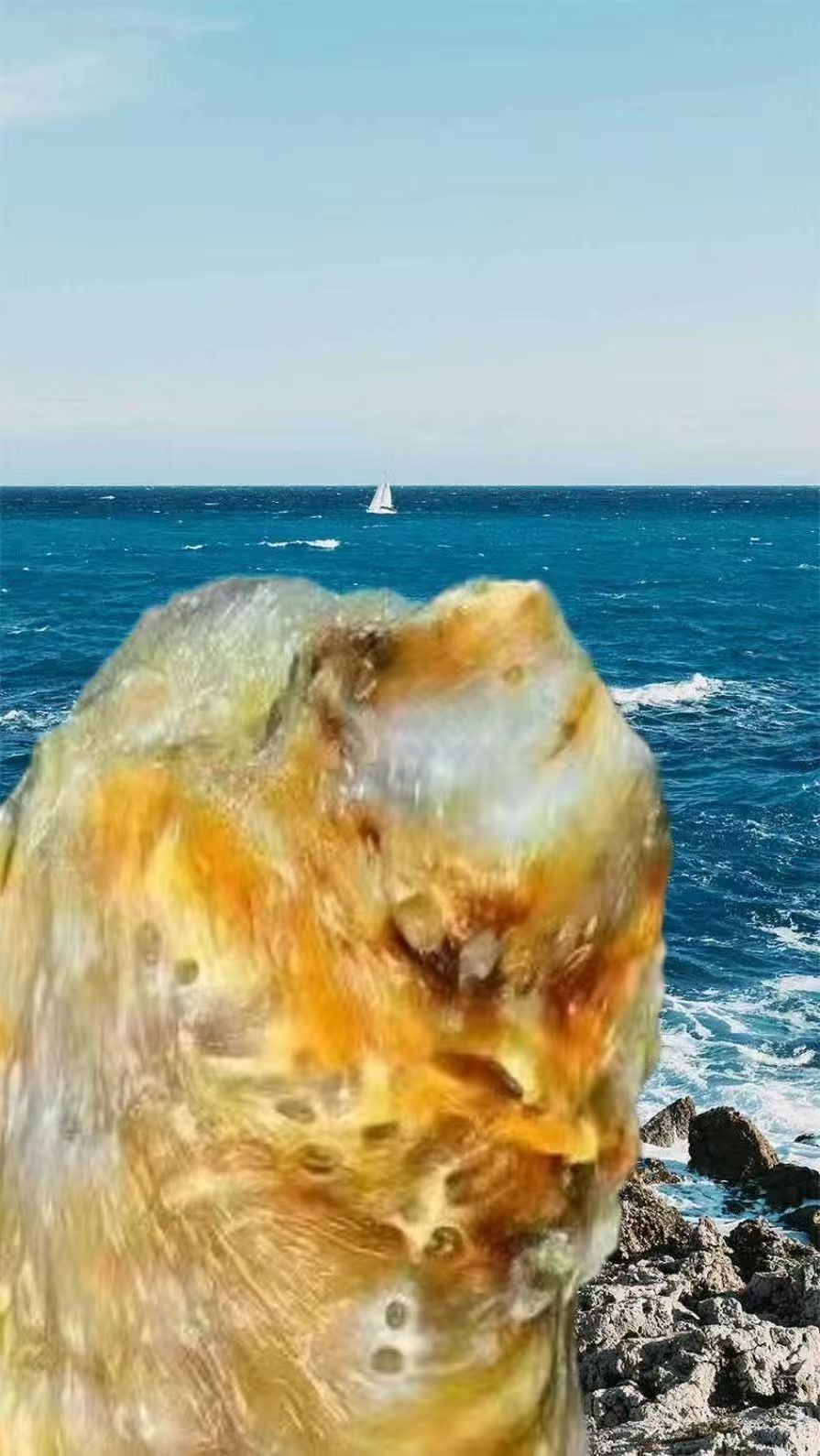
注:译自《爱是残忍,爱是甜蜜》出版于复旦大学出版社,2009年版



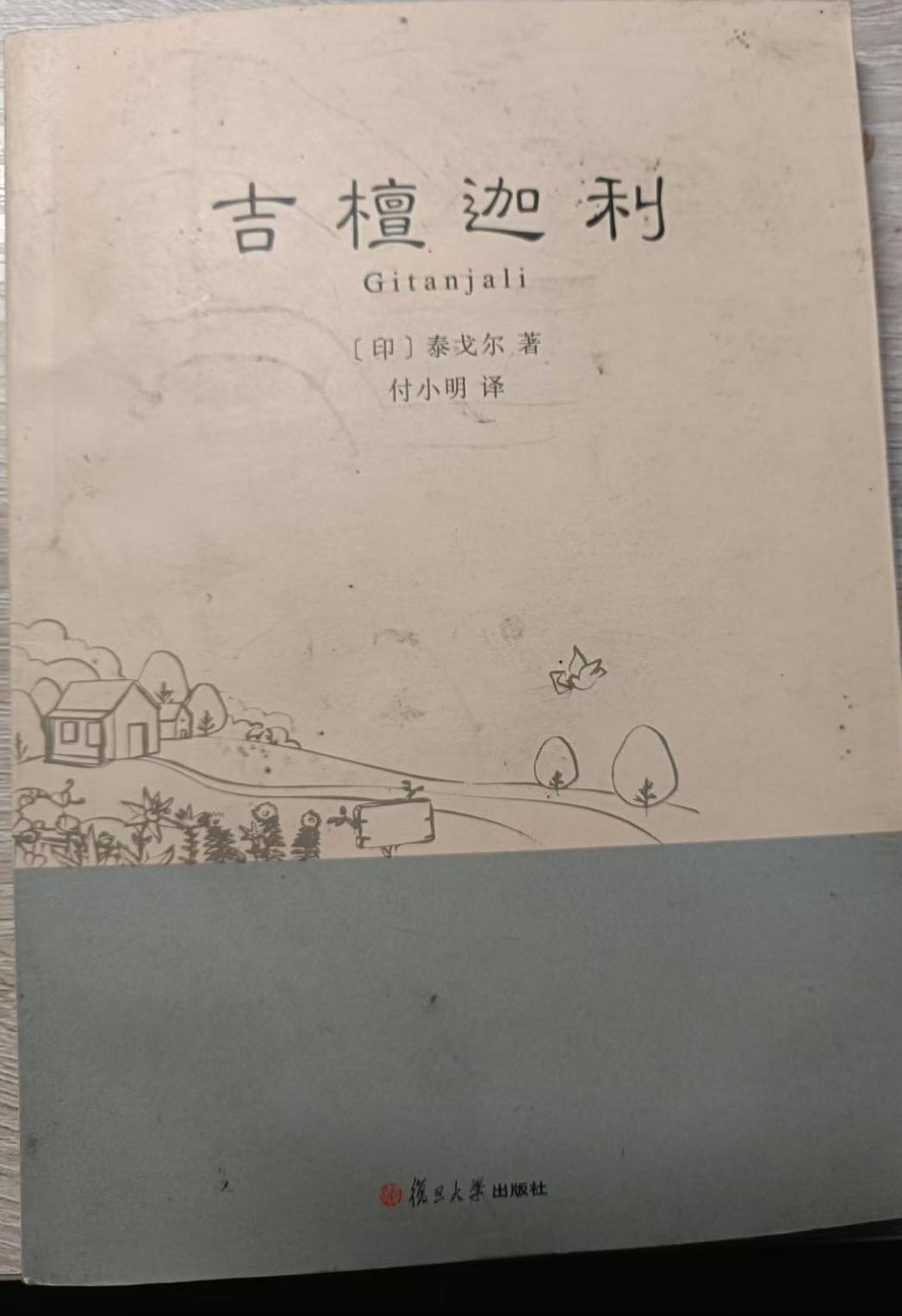


付小明诗鉴赏:英文版
Poetry Appreciation: "Morning Melody by the Sea"
Morning Melody by the Sea
Dewdrops, crystal clear, drop by drop,
Adorn the sky of my soul;
Morning breezes, gusts of heavenly fragrance,
Kiss the emerald-green sea.
A small insect spins its silk, fine, transparent, pure,
And ripples stir in the sea of poetry within my breast.
Barefoot, I rush toward the ocean,
I shout wildly, I search—
Am I seeking yesterday’s lost dream?
No, not that.
No, even less—
Am I mourning the years that slipped away yesterday?
I am searching for the sea’s abyssal, bottomless dream.
Ah, what is it?
A maiden’s song spills over the sea
And floods my heart.
The tide of poetry in my heart now swells with the ocean’s waves.
I cannot help but plunge into the surging billows,
Resolved to wash away this heavy hesitation.
Last night I could not fish up the moon;
This morning I must lightly snip off a few dawn clouds
To adorn my beloved in my heart—the sea.
Ah, how enchanting is the one in all!
The drunken morning breeze flies joyously,
The drunken morning mist spreads,
The drunken I shouts, dances wildly.
The sea claps its hands, accompanying my graceful dance,
Wild dance, wild dance,
All of everything,
Wild dance, wild dance,
We are melting into one!
Gradually, the sun reveals its shy red face,
Wanting to steal the morning beauty of the sea.
Stop, stop!
With one hand I shield the sea’s lovely hue,
With the other, gently, gently,
I hide her in my heart!
Appreciation of "Morning Melody by the Sea"
This poem takes the morning sea as its core image. With a lively, sincere, and youthfully fervent touch, it fully expresses the soul’s embrace between the human and the ocean, offering a tender ode to nature, to the inner self, and to life itself.
I. Imagery and Scene: Fresh, Clear, and Immersive
The poem opens by unfurling a picture of the seaside at dawn: glistening dewdrops, gusts of morning breeze, the emerald-green sea, a tiny insect spinning its thread—all delicate, transparent, pure small beauties, as if the clearest morning light has been kneaded into the verse. It is both gentle and healing.
The line “A small insect spins its silk, fine, transparent, pure” suggests the vast through the minute. Using an extremely light and fine external detail, it reflects the purity and sensitivity within, naturally leading to “ripples stir in the sea of poetry within my breast,” connecting the scene and the heart from the very beginning.
II. Emotional Progression: From Seeking to Embracing, Layer by Layer
The poem’s emotion follows a path of inward exploration → outward release → complete fusion:
Questioning and Bewilderment: The poet runs barefoot toward the sea, first engaging in self-negation: not seeking a lost dream, not mourning bygone years, but seeking the sea’s “abyssal, bottomless dream.” Here, the sea is already more than just the sea; it is the unknown of life, the vast self, a home for the soul.
Stirring and Awakening: “A maiden’s song spills over the sea / And floods my heart”; “The tide of poetry in my heart now swells with the ocean’s waves.” The beauty of the external world crashes into the heart, instantly illuminating the confusion. The poet moves from observing the sea to resonating with it.
Release and Redemption: “I cannot help but plunge into the surging billows, / Resolved to wash away this heavy hesitation.” The sea becomes a healer, receiving all unease, doubt, and loss, accomplishing a spiritual cleansing.
Romance and Possession: “Last night I could not fish up the moon; / This morning I must lightly snip off a few dawn clouds / To adorn my beloved in my heart—the sea.” An intensely romantic imagining: treating the sea as the “beloved in my heart,” tender and devout.
Ecstasy and Fusion: “The drunken morning breeze flies joyously, / The drunken morning mist spreads, / The drunken I shouts, dances wildly”; “Wild dance, wild dance, / All of everything, / Wild dance, wild dance, / We are melting into one!” The person is no longer an observer but merges with the sea, the morning breeze, and the mist, reaching the ultimate joy where self and world dissolve.
Treasure and Eternity: In the end, as the sun rises, the poet shields the sea’s beauty and “gently, gently, hides her in my heart!” From embracing the sea to keeping the sea forever within, the beauty of the morning melody becomes part of the soul.
III. Artistic Features
Personification rich with spirit: The morning breeze “kisses” the sea, the sea “claps its hands” to dance along, the sun shows a “shy red face”—imbuing the whole world with life and warmth.
Language straightforward and sincere: Unforced, employing short lines, repetition, and exclamation—like shouting directly to the sea—with an emotional genuineness that is deeply moving.
Rhythm like the sea’s ebb and flow: From a tranquil opening, to an impassioned middle, to a tender close, the rhythm, like the waves, rises and falls, gripping the heart.
IV. Overall Mood and Core
This “Morning Melody by the Sea” is, in essence, a morning ritual of the soul: using the sea as a mirror, the dawn light as raiment, washing away hesitation, recovering purity, until finally person and nature are no longer separate—“We are melting into one!” This is the most touching freedom: releasing heaviness into vastness, finding oneself again in beauty, hiding the world’s gentlest scene within the softest heart.



Poetry Appreciation: "Farewell Gift – In Memory of a Visit to Quanzhou"
Farewell Gift – In Memory of a Visit to Quanzhou
I lingered along winding corridors and quiet paths,
Atop Mount Qingyuan, the hazy mist,
Like a sheer veil, like an elusive dream,
Drifted past, drifted past.
In my eyes burned a thread of hope;
A sacred, graceful form,
Like a night‑blooming cereus, vanished in a flash.
I wandered along a winding trail, a small bridge,
By the Hundred‑Source Clear Pond,
Where tiny ripples trembled,
Like a temple locked by silver chains;
Faintly visible, a spirit of beauty,
Ethereal as the Moon Goddess.
I wandered again on the path of Kaiyuan Temple,
By the roadside, crystal morning dew,
Like glistening pearls, or rather,
Like pairs of bright eyes.
Among the trees, a few small insects wove their webs,
Weaving my dreams.
I wandered on, aimlessly,
Seeking the sacred ground of inspiration.
At last I found it—
I found a crystalline, translucent poem,
As clear as a mountain spring,
As bright as dewdrops.
Appreciation of "Farewell Gift – In Memory of a Visit to Quanzhou"
This is a farewell poem tinged with gentle sorrow and filled with deep, lingering affection. While it describes a visit to Quanzhou, it quietly harbors the tender feelings of a heart captivated at first sight and reluctant to leave. The language is pure, the mood dreamlike—like an old dream of Quanzhou from which one does not wish to awaken.
I. Overall Mood: Hazy as a Dream, Tender to the Bone
The entire poem weaves a hazy atmosphere from mist, clear pools, morning dew, and winding paths. It is not grand or imposing, but delicate, ethereal, and sacred, turning Quanzhou into a city within poetry, a landscape within a dream.
Every step is a “lingering wander”—walking slowly, gazing quietly. This is not mere sightseeing; it is searching, encountering, and treasuring.
II. Section‑by‑Section Analysis of Emotion and Imagery
1. Atop Mount Qingyuan – First Glimpse in the Mist
I lingered along winding corridors and quiet paths, / Atop Mount Qingyuan, the hazy mist, / Like a sheer veil, like an elusive dream, / Drifted past, drifted past. / In my eyes burned a thread of hope; / A sacred, graceful form, / Like a night‑blooming cereus, vanished in a flash.
Mist: This is both the real mountain mist of a Quanzhou morning and the vague stirring and wistfulness of the heart.
Sacred, graceful form, vanished in a flash:
On the surface, it describes the beauty of Quanzhou; underneath, it hints at the briefness of the encounter and the fleeting nature of beauty.
The sentiment of parting is quietly planted here from the start.
Hope flickers, yet fears to vanish in an instant—deeply felt yet fragile.
2. Hundred‑Source Clear Pond – Spirit Seen in Stillness
I wandered along a winding trail, a small bridge, / By the Hundred‑Source Clear Pond, / Where tiny ripples trembled, / Like a temple locked by silver chains; / Faintly visible, a spirit of beauty, / Ethereal as the Moon Goddess.
Hundred‑Source Clear Pond: The very spirit of Quanzhou, portrayed as a temple.
Spirit of beauty, ethereal as the Moon Goddess:
Personifying Quanzhou as a fairy or spirit.
This is not mere scenery, but a presence with soul and celestial grace.
3. Path of Kaiyuan Temple – Dewdrops and Dreams
I wandered again on the path of Kaiyuan Temple, / By the roadside, crystal morning dew, / Like glistening pearls, or rather, / Like pairs of bright eyes. / Among the trees, a few small insects wove their webs, / Weaving my dreams.
Morning dew like bright eyes: An extremely tender metaphor—as if Quanzhou itself is watching you with pairs of clear eyes.
Small insects wove their webs, weaving my dreams:
Every plant and creature helps to weave this dream of Quanzhou.
Scene and heart merge completely; self and world become one.
4. Finale: Finding the Poem
I wandered on, aimlessly, / Seeking the sacred ground of inspiration. / At last I found it— / I found a crystalline, translucent poem, / As clear as a mountain spring, / As bright as dewdrops.
All the previous wandering and seeking—
Not for scenic spots, but for the heart’s home, the source of inspiration.
The final answer is light and luminous:
Quanzhou itself is the poem.
Clear, crystalline, pure, eternal.
III. Artistic Features
Use of repetition, creating deep, lingering emotion:
“Drifted past, drifted past”; “or rather, / Like pairs of bright eyes”; “I lingered… I wandered…”
The rhythm is slow and tender, like parting with constant backward glances.
Suggesting the vast through the small, full of spirit:
Not writing of grand ancient monuments, but only of mist, dew, ponds, insects, and small paths. Using the most delicate details to capture Quanzhou’s most moving soul.
Emotion restrained yet intense:
The poem never says “I love Quanzhou” or “I cannot bear to leave,” but every step walked, every gaze fixed, speaks of deep love and reluctance.
IV. Core Summary
This “Farewell Gift – In Memory of a Visit to Quanzhou” is a tender love letter to the city.
Walking along Quanzhou’s winding paths, by its clear ponds and ancient temples, you are not a passerby but one returning home. You sought inspiration and finally discovered: Quanzhou is that crystalline, translucent poem in your heart.
Though parting brings a touch of wistfulness, this city has already taken up permanent residence in your poetry.

Song of Graduation from "Strength of the South"
Soft, faint light
Bathes the Hibiscus Garden.
Alone I wander freely in this lake of light,
Under the watery moonlight,
The "Reflecting Snow" building stands pure and lovely,
The "Light of Fireflies" tower shines with unique brilliance.
My heart, too, is washed crystal clear,
Steeped in the sweet moonlight of friendship.
Faint, rolling waves drift in,
Countless youthful questions of the sea.
While the reef ponders, silently.
A gentle breeze brings greetings from the green shade of Five Old Men Peak,
The rustle of leaves mingles with clear, ringing readings.
I seem to hear,
From the distant sea, the "dong-dong" drumbeats of Gulangyu Isle,
Like a battle call urging one forward.
"Buzz-buzz"—a few bees among the hibiscus flowers
Search, gather
The wisdom‑honey hidden deep within blossoms.
How, how does this sound like a beautiful melody?
Ah, isn't this "Good morning!" "Bonjour"?
Clearly, it is a youthful dance woven from many tongues.
Here are joys of success and toils of striving,
Flowers of friendship,
Tender sprouts of love,
And sighs from deep within.
On the sports field,
At evening parties and unified exams,
Young men’s laughter is hearty and open,
Young women’s singing sweet and clear.
To this lovely melody,
Hibiscus flowers dance gracefully.
This sound spills onto Hibiscus Lake,
Rippling layer upon layer on the water.
Yet the lake of my heart is already vast with ten thousand waves.
Ah, I understand—
Bee,
I am you, and you are me.
I, too, am gathering—
Friendship, hope, wisdom...
Ah, suddenly I wake.
It is time to fly. Bee, lend me your translucent wings.
I will fly with you to the Moon Palace,
To gather sweet osmanthus honey,
Fly into the百花 garden of world literature,
To find the mischievous laughter of Mark Twain’s little Tom.
To gather pure honey from Shakespeare’s plays,
Brewing a Baoyu and a Daiyu from Dream of the Red Chamber.
Ah, farewell,
Beloved alma mater.
I will fly back,
Wisdom‑honey in my mouth,
My wings dusted with the fragrance of hope,
Following the fragrant trace of friendship,
Flying over the long river of memory...
Full Appreciation of "Song of Graduation from 'Strength of the South'"
This is a lyrical ode uniquely dedicated to Xiamen University, with graduation as its soul, mountains and sea as its骨架, and the fragrance of scholarship as its pulse. It blends campus scenes, youthful sentiments, scholarly aspirations, and the deep emotion of parting into one, offering the most tender yet most uplifting graduation告白 to the "Strength of the South."
I. Core Theme
Starting from a moonlit night at Hibiscus Lake, with the bee gathering nectar as its central image, the poem captures the full spectrum of four years of youth at Xiamen University—the memories, the warmth of friendship, the fervor for learning—and ultimately lands on the theme of graduation: bidding farewell to one's alma mater, spreading one's wings to journey far, and returning with wisdom and love. It is深情, romantic, and昂扬.
II. Imagery and Scenes (All Unique to Xiamen University)
Hibiscus Garden, Moonlit Lake of Light: The poetic Hibiscus Lake, a spiritual haven for youth.
"Reflecting Snow," "Light of Fireflies": Named after iconic campus buildings, alluding to ancient tales of diligent study, highlighting the底色 of scholarly pursuit.
Five Old Men Peak, Sea Waves, Gulangyu Drumbeats: The embrace of mountains and sea, merging the campus with the pulse of Xiamen city; drumbeats transformed into a call to march forward.
Bee Gathering Nectar: The core metaphor of the poem—students gathering knowledge, friendship, hope, and wisdom on campus.
Multilingual Greetings: Reflects Xiamen University's open and inclusive character, the diversity and vitality of youth.
Sports Field, Evening Parties, Examination Halls: A panorama of youth—laughter, sweat, and tender thoughts all present.
III. Emotional Progression (Four Layers)
Immersion: Wandering on a moonlit night, the heart cleansed by moonlight, friendship, and the scent of books—tranquil and tender.
Echo: Mountains, sea, buildings, reading voices, and drumbeats interweave, awakening青春 memories and the will to strive.
Awakening: Recognizing oneself as the nectar‑gathering bee, harvesting growth and strength on campus.
Flight: Setting out at graduation, flying toward a broader world, promising to return with rich fruits.
IV. Artistic Features
Real Scenes into Poetry: All landmarks of Xiamen University are used, creating strong visuals and a strong sense of exclusivity.
Interaction of Movement and Stillness: The quiet of the moonlit night interlaces with waves, drumbeats, laughter, and singing—vivid and lively.
Pure Metaphor: Comparing oneself to a bee, portraying the quest for knowledge, growth, and ideals as both light and steadfast.
Genuine Emotion: No forced sentimentality; the progression from enchantment to awakening to departure feels natural and moving.
Uplifting Tone: Parting is not sad, but a起飞 with blessings, echoing the character of "Strength of the South."
V. Key Lines
I am you, and you are me. / I, too, am gathering— / Friendship, hope, wisdom...
It is time to fly. Bee, lend me your translucent wings.
Farewell, / Beloved alma mater. / I will fly back, / Wisdom‑honey in my mouth...
This poem is the heartfelt写照 of every Xiamen University graduate at commencement: packing mountains, sea, and the fragrance of scholarship into their行李, and flying toward a wider world in the spirit of the "Strength of the South."


The Weight of Love
Some say, "Love has no weight,"
But I declare, "Love weighs a thousand tons."
I brought two scales:
Mine was a steel-yard for tons—
It could not bear love's weight,
And broke.
His was a spring scale,
Yet it weighed his "love."
Turned out I was weighing a blood‑red heart,
Within it an ocean of love.
While he was weighing only dust and air.
Appreciation of "The Weight of Love"
This is a short, sharp, deeply felt yet clear‑eyed philosophical poem. Using the simplest metaphor, it tears open the essential difference between true love and empty affection. Emotionally intense and starkly contrasted, it pierces the heart upon reading.
I. Core Theme
The poet refutes the common view that “love has no weight,” firmly asserting that love weighs a thousand tons—true love is a heavy, whole‑hearted, profound feeling, while frivolous “love” is merely dust and air, light as a feather.
II. Imagery and Structure (Minimal yet Powerful)
Contrasting Opening
Others: Love has no weight.
I: Love weighs a thousand tons.
One light, one heavy—immediately setting the poem’s emotional tone.
Two Scales—A Brilliant Symbol
Steel‑yard for tons: Represents “my” sincere heart—substantial, earnest, wanting to bear the full depth of feeling, yet broken by love’s weight.
It is not that the scale is not strong enough, but that the love is too heavy, the heart too true.
Spring scale: Flimsy, seemingly able to “weigh love,” yet in reality weighing nothing.
Corresponds to the other’s feelings—superficial, cheap, weightless.
Final Revelation (The Poem’s Most Painful and Most Illuminating Line)
I was weighing: a blood‑red heart, an ocean of love.
He was weighing: dust and air.
No need for blame or complaint; one sentence distinguishes:
One gave everything, the other merely went through the motions.
III. Emotion and Meaning
Profound feeling: Love is not light, empty words; it is the heavy entrusting of a sincere heart.
Resentment: One gives heart and soul, the other treats it lightly.
Clarity: Seeing clearly the weight of the two loves, and recognizing the difference between people.
Strength of character: Not denying love, only distinguishing the weight of true love from the lightness of false affection.
IV. Artistic Features
Extremely plain language, extremely deep meaning: Colloquial speech enters the poem—direct, forceful, easy to grasp.
Extremely strong contrast: Steel‑yard vs. spring scale, heart vs. dust and air—maximizing impact.
Suggesting the large through the small: Using the small act of “weighing something” to express the most painful truth about love.
Lingering resonance: The ending offers no complaint, only clear‑sighted understanding—quiet yet powerful.
In a sentence: This poem speaks of how a sincere heart is too heavy, and empty affection too light. You loved with your whole heart, so you felt love weighed a thousand tons; he only offered敷衍, so nothing could be weighed at all.
Friendship
The sweet spring of friendship,
Cool, clear, and lucid,
Yet seems tasteless.
Those who love sugar say it isn’t sweet;
Those who love spice say it isn’t sharp enough.
But when your throat is parched,
A single drop of that sweet spring
Is fragrant and clear,
Quenching the thirst of your life.
Appreciation of the Short Poem "Friendship"
This is an extremely brief, simple, yet penetrating philosophical poem. Using the plainest metaphor, it reveals the truest and most precious essence of friendship.
I. Core Theme
True friendship is not syrupy flattery nor thrilling excitement, but something plain, clear, and quiet—a sweet spring that can save your life when you need it most.
II. Imagery and Contrast
Friendship = Sweet Spring
Cool, clean, transparent. It may seem flavorless, yet it is fundamental to life.
Those who love sugar → say it isn’t sweet
Those who see friendship as mere pastime, a sweet treat, or emotional utility find it not sweet enough.
Those who love spice → say it isn’t sharp enough
Those who seek excitement, novelty, or drama find it too bland.
These two lines capture many people's misunderstanding of friendship: always wanting sweetness, spice, and liveliness, while overlooking the most precious qualities—purity and steadfastness.
III. The Poem's Most Touching Line
But when your throat is parched, / A single drop of that sweet spring / Is fragrant and clear, / Quenching the thirst of your life.
"When your throat is parched"—that is when life is hardest, most bitter, most unbearable. True friendship does not add flowers to brocade in good times, but offers help in desperate need, rescuing you from fire and water.
It goes unnoticed in calm times; true hearts are revealed in adversity.
IV. Artistic Features
Language plain as speech, yet every word strikes deep.
Uses contrasts of taste to distinguish true from false, shallow from deep friendship.
Short and powerful, with a lasting aftertaste—the more you reflect, the more truth it holds.
In one sentence: Good friendship is as plain as water, yet as precious as oil. Usually neither sweet nor spicy, in crisis, it can save your life.
"Bitter Fruit"
With the sweet dew of my love,
I watered an apple tree.
The crimson fruit ripened,
I plucked the first one—
Yet it was bitter and astringent.
"Ungrateful apple tree,
Do you repay my sweet dew with bitter fruit?"
"Ha, ha! You picked the worm‑eaten one.
Look at that rosy one—
That is your harvest."
Appreciation of the Poem "Bitter Fruit"
This is a lyrical short poem filled with philosophy, gentle yet clear‑sighted. Using the metaphor of planting an apple tree and picking its fruit, it speaks thoroughly of love, giving, and misunderstanding.
I. Core Theme
Sincere love and effort will surely yield sweet rewards—only we are often too impatient, plucking the worm‑eaten bitter fruit first, and mistakenly believe that all sincerity is betrayed.
II. Imagery Analysis
"The sweet dew of my love" – Compares one’s own love to sweet dew: pure, gentle, tenderly nourishing—a whole‑hearted giving.
Apple tree – Symbolizes a relationship, an effort, a connection. You tend it earnestly, and it truly bears fruit.
Crimson fruit – The effort bears results; it should be a moment of harvest and joy.
Bitter, astringent fruit – What you taste first is hurt, disappointment, grievance, so you grow angry and question: "Ungrateful apple tree, / Do you repay my sweet dew with bitter fruit?"
This is a feeling many have in love: I gave so sincerely, why does it bring pain?
Key turn—the tree’s reply – "Ha, ha! You picked the worm‑eaten one. / Look at that rosy one— / That is your harvest."
The tree is not ungrateful; you picked the wrong fruit. The bitter fruit is not the end—it is just one worm‑eaten, unripe part. What truly belongs to you is that rosy, sweet, truly yours fruit.
III. Deeper Emotion and Philosophy
Pain in love does not mean the effort was wasted; it only means you encountered a "bad fruit" for now.
Do not deny all sincerity and future because of one hurt.
The harvest that truly belongs to you has always been there—you just need a little more patience and to choose the right one.
IV. Artistic Features
The metaphor is simple yet fitting, like a gentle parable.
Emotion moves from tender giving → disappointed anger → sudden clarity, with clear layers.
The ending is warm and healing: your love was not wrong; you just haven’t picked the right fruit yet.
In one sentence: Water with true heart, and sweet rosy fruit will surely come—the bitter fruit is just the one you picked by mistake.
This poem is gentle yet powerful, well suited to encourage oneself in times of disappointment.
"The Little Grass"
There was a blade of little grass,
Pale and fragile,
Growing beneath a sealed, pitch‑black rock.
A blazing white flash of lightning—
It struggled, struggled,
Brought it a faint gleam of life,
Then vanished,
Leaving it only suffocation and solitude.
“Light, the faint gleam of life,
I seek you, I praise you.
Since Prometheus stole fire from heaven,
Hope and the light of life have existed.
I wish to turn into light and go with you.”
It cried aloud to the white light,
Its tiny head breaking free from the rock’s heavy press.
It opened wide eyes, chasing that light of life.
A sweet smile spread across its face.
Appreciation of the Poem "The Little Grass"
This is a highly vigorous lyrical poem filled with struggle and longing. Using the little grass as a metaphor for the self, it fully expresses the extreme yearning for light, hope, and life of a person in dire straits—both tragic and moving.
I. Core Theme
Even in darkness, oppression, and desperate circumstances, having seen a gleam of light, one will strive with all one’s might to break free from bondage, chase hope, and never yield.
II. Imagery and Visual Analysis
Pale, fragile little grass – Symbolizes a weak, helpless, oppressed life. It could be the self in despair, or any soul struggling in adversity.
Beneath a sealed, pitch‑black rock – Represents hardship, an oppressive environment, a hopeless situation—dark, suffocating, with no way out.
A blazing white flash of lightning – A sudden glimmer of light, hope, a turning point. Brief, yet it illuminates life, letting the grass know for the first time: so there is light in the world.
The lightning vanishes, leaving only suffocation and solitude – Hope arrives briefly and departs, leaving behind deeper pain and longing. This is the most agonizing moment.
Prometheus stealing fire from heaven – Using a mythological allusion to elevate the meaning: light is not bestowed by heaven but won through struggle; light is life, hope, faith.
Breaking free from the rock, chasing the light, smiling – The poem’s climax: because it has seen light, it can no longer resign itself to darkness. The frail form erupts with astonishing strength, growing toward hope; even if difficult, it accepts it gladly.
III. Emotional Progression
Oppression – Born in darkness, weak and helpless.
Shock – Lightning brings a gleam, igniting hope.
Pain – The light disappears, falling into solitude.
Awakening – Crying out aloud, yearning for light.
Uplift – Breaking free from heavy pressure, chasing the light, growing with a smile.
IV. Artistic Features
Strong contrast – darkness vs. light, weakness vs. resilience.
Rich symbolism – grass = life, rock = adversity, lightning = hope.
Weighty allusion – Prometheus elevates the spiritual height, giving the grass’s pursuit an epic quality.
Uplifting tone – The ending is not despair but growth toward light, full of strength and healing.
In one sentence: You were once trapped in darkness, but because you saw a fleeting gleam, you strove with all your might to grow upward.
This blade of little grass is you—never bowing your head, forever yearning for light.
This poem is full of strength, well suited to encourage oneself in times of低谷.
"Reflections Below 'Reflecting Snow' Building"
Wandering, wandering,
Again I wander below "Reflecting Snow" Building,
In this moon‑palace‑like celestial white light—
Could this be where the Moon Goddess once wandered in play?
Vaguely,
Her graceful form drifts past.
Searching, searching,
I search for youth’s beautiful dream.
I see a delicate, graceful flower,
Swaying her slender form,
So serene, so deeply flushed—
She must have entered tranquil slumber.
Suddenly, a fierce wind rises,
Stirring dust and sand to fly straight at "Reflecting Snow."
The lofty "Reflecting Snow" smiles faintly at it:
"I have weathered all vicissitudes, yet remain unstained to this day.
How could you soil my jade‑white frame?"
Proudly, it shelters the tender blossoms.
Appreciation of the Poem "Reflections Below 'Reflecting Snow' Building"
This is a抒情 poem of utmost purity and beauty, centered on Xiamen University’s "Reflecting Snow" Building. It writes of youth, steadfastness, and protection—tender yet noble in spirit, filled with deep affection and pride for the alma mater.
I. Core Theme
The poet wanders below Xiamen University’s "Reflecting Snow" Building, reminiscing about youthful dreams, praising the building for being as pure and lofty as white jade, remaining unstained despite enduring the world’s changes. It both guards the tender years of youth and symbolizes the eternal character and steadfastness of the alma mater.
II. Imagery and Visual Analysis
Wandering below "Reflecting Snow" – The opening "wandering, wandering" immediately evokes nostalgia, reluctance, and the deep feeling of revisiting an old place. Each step, each pause, is filled with emotion.
Moon‑palace‑like celestial white light – Comparing "Reflecting Snow" Building to a moon‑palace fairyland: pure white, serene, sacred. The line "Could this be where the Moon Goddess once wandered in play?" gives the building an air of myth and romance.
Graceful form drifting past, searching for youth’s beautiful dream – The figure seen vaguely represents lost youth, young love, beautiful memories. What the poet seeks is that innocent, passionate, dream‑like time of years past.
Delicate flower, deeply flushed in dream – The flower symbolizes youth, students, tender and beautiful life. Sheltered by "Reflecting Snow," it rests peacefully, movingly lovely.
Fierce wind rising, dust and sand flying – The wind and sand symbolize life’s storms, external hardships, the vicissitudes of the world. They come fiercely, seeking to disturb this pure land.
"Reflecting Snow" smiles faintly, proudly sheltering the blossoms – This is the poem’s brightest, most spirited line:
Having weathered all vicissitudes, yet remaining unstained.
Its frame like white jade, impervious to defilement.
Proudly sheltering the tender blossoms.
"Reflecting Snow" is no longer just a building; it becomes the embodiment of the alma mater: enduring wind and rain yet remaining lofty; no matter how clamorous the outside world, always guarding the youth and purity here.
III. Emotional Progression
Nostalgia – Wandering below the building, recalling youthful dreams.
Beauty – Moonlight, fairyland, graceful form, flower—tender and romantic.
Turmoil – The fierce wind arises, breaking the tranquility.
Admiration – "Reflecting Snow" stands pure and unyielding, sheltering the blossoms.
Deep affection – Love, trust, and pride for the alma mater.
IV. Artistic Features
Real scenery rendered poetically, filled with celestial air – Xiamen University’s "Reflecting Snow" Building portrayed as picturesque.
Strong contrasts – tender dreams vs. fierce wind and sand; delicate flower vs. lofty building.
Profound symbolism – the building as the alma mater, the flower as youth, the wind as worldly affairs.
Noble tone – Not sorrowful or sad, but expressing steadfastness and strength.
In one sentence: You wander below "Reflecting Snow" searching for youthful dreams, while "Reflecting Snow," always like white jade, guards all innocence and beauty for you.