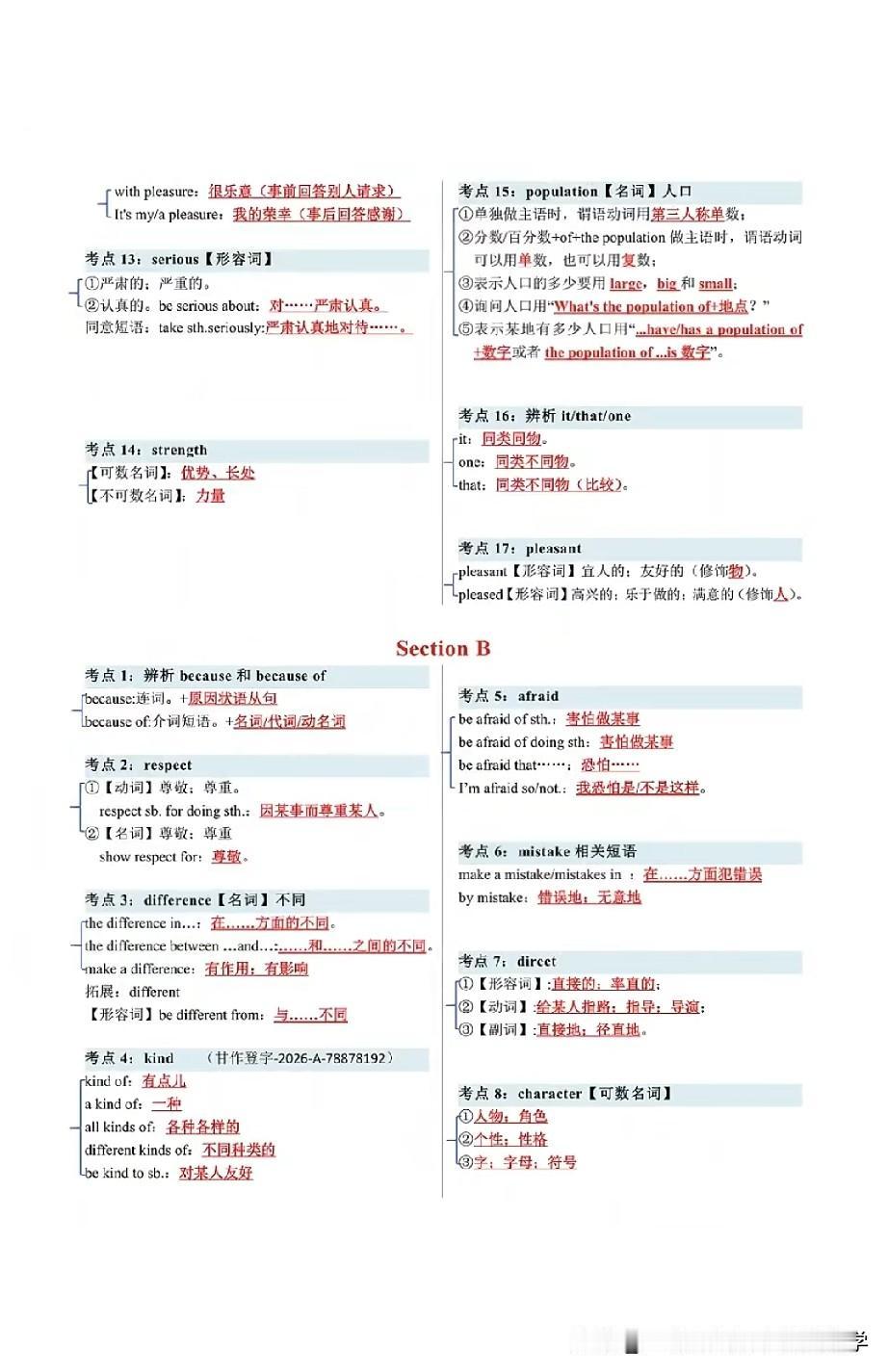
【population的用法】
population最常表示“人口总数”,使用时需要注意主谓一致和修饰词。
1.表示整体人口,谓语用单数
①The population of China is large.
中国人口众多。
②The world's population is growing fast. 世界人口增长很快。
2.表示具体数量
①China has a populationof about 1.4 billion. 中国人口约14亿。
②The city has a population of 10 million. 这座城市有1000万人口。
③Beijing is a city with a population of over 10 million.
北京是一座人口超过干万的城市。
3.询问人口数量
①What is the population of Japan?
日本有多少人口?
②How large is the population of your hometown? 你们家乡的人口是多少?
⚠️注意:这里用what / how large,不用how many或how much
4.“分数/百分数+of the population"作主语强调其中具体的人时,谓语常用复数: ①About 70% of the population are farmers. 大约70%的人是农民。
②Two thirds of the population live in cities. 三分之二的人口住在城市。
③如果强调整体数字,也可用单数: About 70% of the population is under40.(强调整体比例)
5.形容人口多少
①人多→large /big;
②人少→small。
因此,通常不使用many、much、 few或little 来修饰。
India has a large population. Singapore has a small population.
6.什么时候加s
一般表示一个地区的人口时,population没有复数。
谈到多个国家或地区的各自人口时,才用populations:
the populations of European countries 欧洲各国的人口
它也可以指动物或植物的“种群数量”: the tiger population老虎种群
tiger populations 老虎种群
△用所给词的适当形式填空:
1.The population of Shanghai is ________ than that in Urumuqi.
2.The population of China _____ 1.4 billion and seventy percent of them ____ farmers. (be)
3. How many people are there in Lanzhou? (同义句)
答案:
1.larger2.is,are 3.What's the population of Lanzhou?