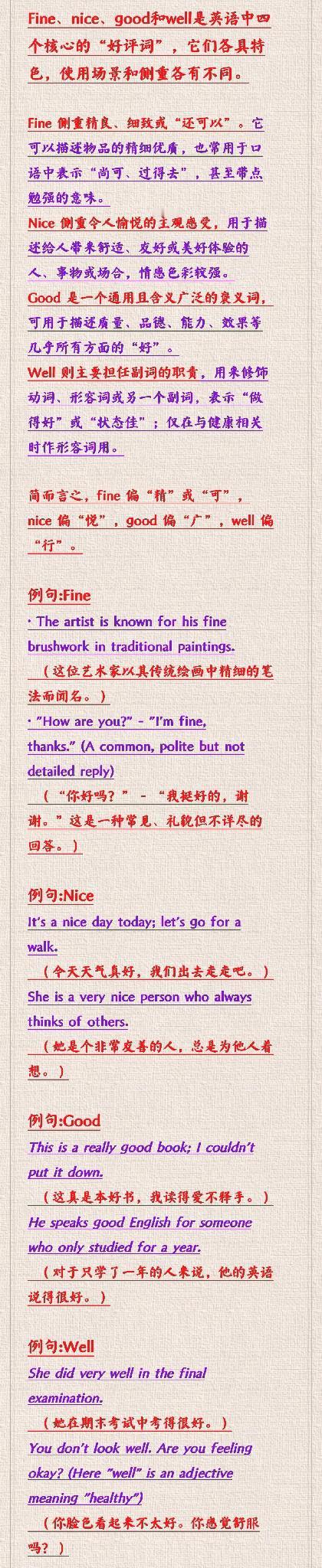
英语中的四个好都是啥? Fine、nice、good和well是英语中四个核心的“好评词”,它们各具特色,使用场景和侧重各有不同。 Fine 侧重精良、细致或“还可以”。它可以描述物品的精细优质,也常用于口语中表示“尚可、过得去”,甚至带点勉强的意味。 Nice 侧重令人愉悦的主观感受,用于描述给人带来舒适、友好或美好体验的人、事物或场合,情感色彩较强。 Good 是一个通用且含义广泛的褒义词,可用于描述质量、品德、能力、效果等几乎所有方面的“好”。 Well 则主要担任副词的职责,用来修饰动词、形容词或另一个副词,表示“做得好”或“状态佳”;仅在与健康相关时作形容词用。 简而言之,fine 偏“精”或“可”,nice 偏“悦”,good 偏“广”,well 偏“行”。 例句:Fine The artist is known for his fine brushwork in traditional paintings. (这位艺术家以其传统绘画中精细的笔法而闻名。) "How are you?" - "I'm fine, thanks." (A common, polite but not detailed reply) (“你好吗?” - “我挺好的,谢谢。”这是一种常见、礼貌但不详尽的回答。) 例句:Nice It's a nice day today; let's go for a walk. (今天天气真好,我们出去走走吧。) She is a very nice person who always thinks of others. (她是个非常友善的人,总是为他人着想。) 例句:Good This is a really good book; I couldn't put it down. (这真是本好书,我读得爱不释手。) He speaks good English for someone who only studied for a year. (对于只学了一年的人来说,他的英语说得很好。) 例句:Well She did very well in the final examination. (她在期末考试中考得很好。) You don't look well. Are you feeling okay? (Here "well" is an adjective meaning "healthy") (你脸色看起来不太好。你感觉舒服吗?)