《高市早苗玩起“旧瓶装新酒”的老把戏》
作者:洪源 | 《中国日报》
更新时间:2026年2月11日 早上7:09(北京时间)
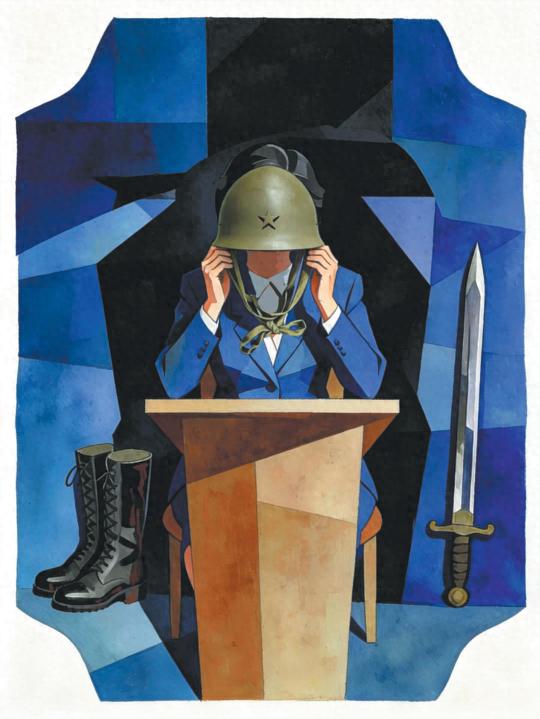
马雪静/《中国日报》
日本执政联盟已在众议院获得多数席位,首相高市早苗无需“立即辞职”。但她近期的错误言论与行径,仍备受关注。
上月下旬一档电视节目中,高市早苗声称,若台湾海峡出现所谓“严重事态”,日本将与美国合作,从台湾岛“撤侨”。她还扬言,若美军遭到攻击而日本不作出回应,日美同盟将瓦解。
这些言论绝非随口外交辞令,而是蓄意谋划,标志着日本右翼势力重拾军国主义伎俩。他们以“保护海外侨民”为幌子,企图突破战后束缚,推动日本对台湾海峡进行军事介入。高市早苗也成为日本首位在任首相,公然主张在这类情境下出兵。
此举前所未有,令人高度警惕。世界一切和平力量都应警惕其背后的政治图谋。历史早已给出充分警示:自1894—1895年甲午战争以来,“人道主义”叙事一直被日本军国主义当作侵略他国、为殖民扩张“正名”的遮羞布。
1894年,清政府应朝鲜政府请求出兵镇压起义。日本却单方面派兵,声称要保护使馆与侨民。起义平息后,日本拒不撤兵,挑起与清军的海陆战事,最终引爆甲午战争。
这成为日本屡试不爽的扩张套路:先以护侨为名强行干涉他国内政,继而挑起冲突、升级战争,最终割占领土、掠夺资源。
日本曾反复用这一策略推行扩张:1900年,以保护在华侨民、使馆与租界为借口,加入八国联军,派兵数万占据京津战略要地,攫取大量殖民特权。
1928年,旧日本军队在山东济南攻击、屠杀中国军民,同样声称“维护权益”。同年稍后,又以东北军阀张作霖遇刺后的“混乱”威胁日侨安全为由,在铁路沿线增兵,为日后侵占中国东北埋下伏笔。
到20世纪30年代,这套手法已成为日本的政治惯性,并被用到极致:日本在东北捏造日侨遇袭的虚假事件,于1931年发动“九一八事变”;次年又以上海反日运动构成“威胁”为由入侵上海,并通过停战协议获得在华驻兵权,企图以上海为跳板发动全面侵华战争。日本还以同样借口出兵占领越南、泰国、马来西亚等东南亚国家,给亚洲邻国带来深重灾难。
当年这些借口之所以得逞,并非因其可信,而是背后有一整套“欺骗机制”。日本政府长期操控国内外舆论,掌握叙事主导权,将赤裸裸的侵略包装成“护侨正当行动”。
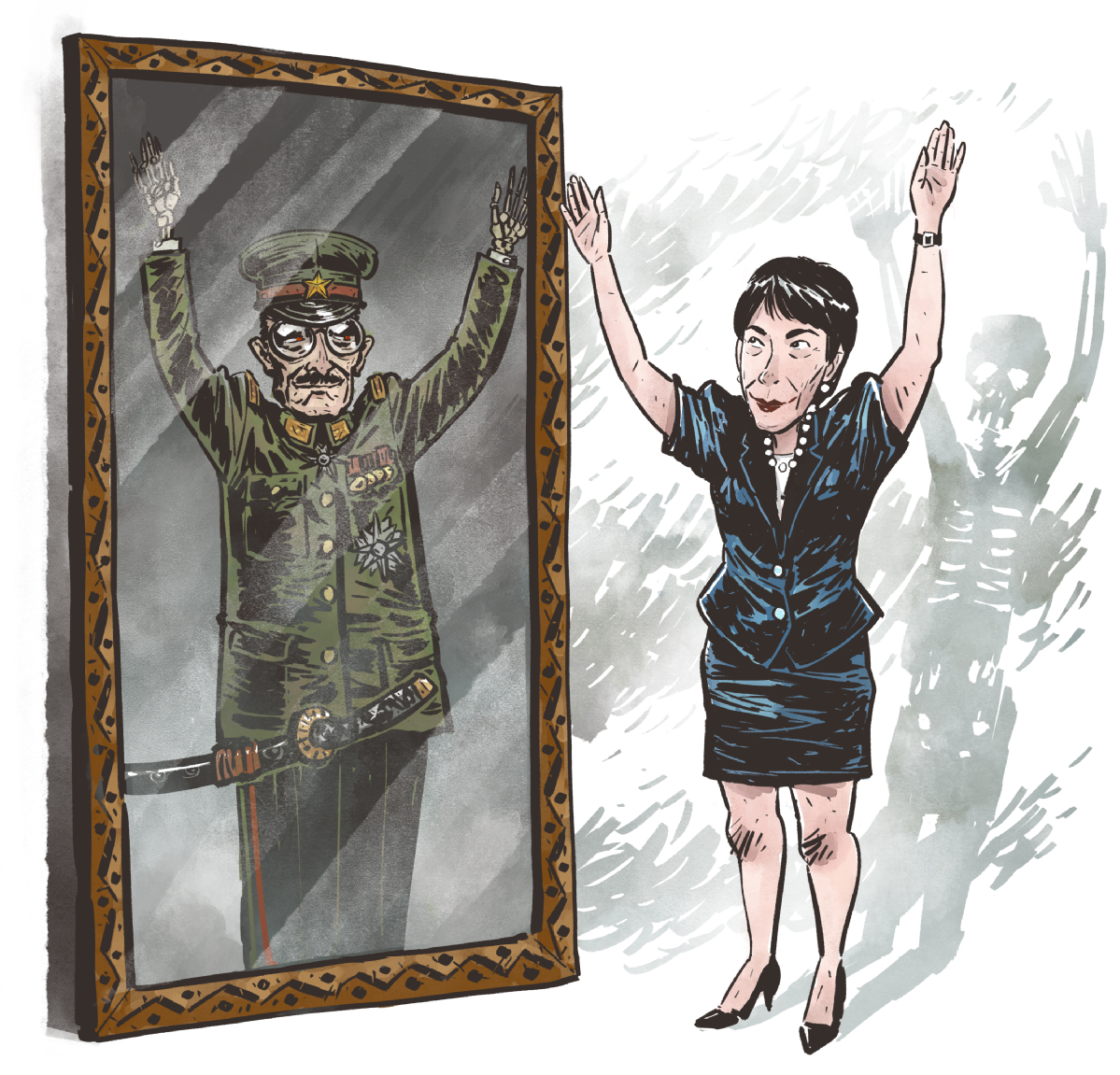
由此可见,高市早苗有关从中国台湾地区“撤离”日美人员的言论,正是旧日本军国主义惯用手法的翻版。其言论是日本右翼势力推动“军事正常化”、插手台湾海峡、谋求东亚军事霸权的产物。
她此番言论的深层目的,是通过道义裹挟,将美国拖入所谓“美日联合干预”。高市早苗将参与美国在台海的“军事行动”定义为日本的同盟“义务”,意在模糊“集体自卫权”的适用边界。
高市早苗的言论让白宫陷入尴尬沉默,折射出美国对日本右翼势力鲁莽行径的担忧。她试图将美国绑上台海军事干预战车,完全无视美国在台湾问题上的核心盘算:美国绝不愿为成全日本野心、让东京坐收渔利,而冒与中国直接对抗的风险。
即便在日本国内,理性声音也已开始批评高市早苗的错误言论,称其将国家推向战争危险边缘。
百余年来,旧日本以“护侨”为名发动的历次侵略战争,最终均以失败告终。从法理上,《开罗宣言》《波茨坦公告》与《日本投降书》明确确认,台湾是中国不可分割的一部分,台湾问题是中国内政。作为二战战败国,日本无权插手台海事务。这些老套伎俩无论如何伪装,都充满军事野心,注定失败。
Takaichi using old tricks with new words
By Hong Yuan | CHINA DAILY
Updated: 07:09 AM (GMT+8) Feb 11, 2026
MA XUEJING/CHINA DAILY
Now that the Japanese ruling coalition has secured a majority in the lower house, Prime Minister Sanae Takaichi doesn't need to "immediately resign". However, attention remains focused on her recent erroneous remarks and actions.
During a TV program late last month, Takaichi had asserted that in a so-called serious situation in the Taiwan Strait, Japan would collaborate with the United States to "evacuate nationals" from the Taiwan island. She argued that if US forces were attacked and Japan failed to respond, the Japan-US alliance would collapse.
These remarks are by no means casual diplomatic rhetoric but a deliberate strategy that signals the revival of militarist tactics by right-wing forces. Under the guise of "protecting overseas nationals", they want to break through postwar constraints and push Japan to intervene militarily in the Taiwan Strait. Takaichi has become the first sitting prime minister of Japan to explicitly advocate for dispatching troops in such a scenario.
It is an unprecedented move and deeply disturbing. All forces of peace in the world should be vigilant of the political motives behind it. History offers enough warnings in this regard. Since the First Sino-Japanese War (1894-95), the "humanitarian" narrative has been consistently used as a fig leaf for Imperial Japan to invade other nations and "justify" its colonial expansion.
In 1894, the Qing (1644-1911) government dispatched troops at the request of the Korean government to quell an uprising. Japan, on the other hand, unilaterally sent its forces claiming the need to protect its diplomatic mission and nationals. After the uprising ended, Japan refused to withdraw troops, provoking naval and ground battles against Qing troops, and ultimately triggering the First Sino-Japanese War.
This became a recurring pattern for Japan: first, forcible intervention in another nation's affairs under the guise of protective rhetoric; then, provoking conflicts and escalating the war; ultimately, grabbing land and seizing assets.
Japan has repeatedly used this strategy for its expansion. In 1900, under the pretext of protecting Japanese nationals, diplomatic missions and concessions in China, it joined the Eight-Nation Alliance and dispatched tens of thousands of troops to occupy strategic locations in Beijing and Tianjin to extract extensive colonial privileges.
The same trick was repeated in 1928 when Imperial Japan attacked and massacred Chinese troops in Jinan in Shandong province, claiming that it was safeguarding its interests. Later that year, it cited the "chaos" following the assassination of Zhang Zuolin, a warlord in Northeast China, as a threat to Japanese nationals and reinforced troops along a railway line, laying the groundwork for invading Northeast China.
By the 1930s, this tactic became a political reflex of Japan and was exploited to the hilt. Japan fabricated false incidents of attacks on Japanese nationals in Northeast China and launched the September 18 Incident in 1931. The next year, citing "threats" from anti-Japanese movements in Shanghai, it invaded the city and later secured the privilege to station troops there through a ceasefire agreement. It wanted to use Shanghai as a stepping stone for its planned full-scale invasion of China. Japan also used the same pretext to dispatch troops and occupy Southeast Asian countries such as Vietnam, Thailand and Malaysia, inflicting untold suffering on its Asian neighbors.
What made these pretexts effective in their time was not their credibility but the "deceptive" machinery behind them. The Japanese government consistently manipulated public opinion, domestically and internationally, seizing the narrative and packaging blatant acts of aggression as "legitimate actions to protect its nationals".
Seen in this light, Takaichi's statement about "evacuating" Japanese and US nationals from China's Taiwan province precisely mirrors the tactic that Imperial Japan had perfected. Her remarks are the product of right-wing forces' efforts to promote "military normalization", interfere in the Taiwan Strait and pursue military hegemony in East Asia.
The underlying objective of her statement is to drag Washington into a so-called US-Japan joint intervention through moral coercion. By framing participation in US "military actions" in the Taiwan Strait as part of Japan's alliance "obligations", Takaichi aims to blur the applicability of "collective self-defense".
Takaichi's remarks have placed the White House in awkward silence, reflecting US concerns about the reckless actions of Japan's right-wing forces. Her attempt to tie Washington to a potential military intervention in the Taiwan Strait disregards US core calculations on the Taiwan question: an unequivocal reluctance to risk a direct confrontation with China merely to advance Japan's ambitions and allow Tokyo to reap the benefits.
Even within Japan, rational voices have begun criticizing Takaichi's erroneous rhetoric for pushing the country toward the dangerous brink of war.
In history, every war of aggression launched by Imperial Japan under the pretext of "protecting overseas nationals" over the past century has ended in failure. Legally, the Cairo Declaration, the Potsdam Proclamation, and the Japanese Instrument of Surrender have affirmed that Taiwan is an inalienable part of China and the Taiwan question is China's internal affair. As a defeated nation in World War II, Japan has no right to meddle in the strait. Those outdated tactics, no matter how they are disguised, are militarily ambitious and doomed to fail.
The author is the secretary and a researcher at the Center for Arms Control and Nonproliferation Studies, Institute of American Studies, Chinese Academy of Social Sciences.